
[ENG] Altranet = Laboratory for collectively surviving the end of the commercial internet
What happens when the internet stops working? What kinds of digital connections exist beyond commercial internet? Is it possible to keep communicating and sharing knowledge without depending on it? How do feminist and community internets sustain themselves?
Over the past five years, centralised commercial internet — controlled by big tech corporations — has revealed critical flaws that threaten its continuity. Beyond the blackouts imposed by authoritarian governments, we face two growing risks: technical outages that leave millions without connectivity, and the ideological danger of a digital infrastructure increasingly aligned with the global far-right agenda. The concentration of power in a handful of tech corporations not only compromises network resilience, but turns the internet into an instrument vulnerable to political and economic interests that can disconnect us selectively, intermittently, or permanently.
Causes of disruptions
- lgorithmic exclusion: Many big tech companies are scaling back their obligation to provide services on equal terms, based on criteria such as age or other sociodemographic characteristics. This includes practices of shadow banning and reduced visibility of social and political content posted by NGOs and activists defending human rights
- Cyberattacks: Wiper programmes, ransomware, supply chain compromise, physical attacks and sabotage, as documented in the "Report on the cybersecurity and resiliency of the EU communications infrastructures and networks" published by the European Commission in February 2024.
- Technical vulnerabilities: Weak scripts and dependencies on outdated software, as experienced in 2025 with the failures of AWS cloud services and Cloudflare, and in 2024 with the Microsoft update that caused blue screens of death across thousands of locations around the world.
- Climate crisis, energy dependence and power cuts: Situations of ultra-concentration of major internet infrastructure in a few companies with critical energy dependence, as experienced during the massive power outage in Spain in May 2025.
The current context
Systems that map outages, blackouts and internet censorship show a significant increase in incidents. As our dependence on internet grows across both critical and non-critical sectors, these disruptions affect an ever-growing number of people, collectives and organisations, leaving them at risk during crises and emergencies. And it is not just a matter of technical failures: countries like Russia, Iran and Myanmar are actively working towards full disconnection from the global internet, while others are exporting Chinese network control technology, as Intersec Lab has recently demonstrated.
In addition, digital gender-based violence — control, surveillance, deepfakes, online harassment and shadow banning — increasingly affects the content of feminist activists, organisations and rights defenders on platforms such as Meta and X. Commercial internet was never neutral: it is increasingly and openly assumed to be a space that discriminates, censors and selectively disconnects. This scenario impacts women and gender dissidents, who sustain digital care networks: support against gender-based violence, assistance for migrant and racialised women, LGBTIQ+ activism and the defence of sexual and reproductive rights in hostile contexts. We are also the primary targets of algorithmic censorship, harassment and online political persecution. When commercial internet fails, we are the first to be affected.
Altranet responds to four urgent challenges:
- the resilience crisis of commercial internet;
- the gender gap in access to and governance of digital infrastructures;
- the intensification of digital gender-based violence and hate speech;
- and the need for cultural alternatives that bring together art, critical thinking and technical practice from a feminist, decolonial and intersectional perspective.
Our proposal
We therefore propose a laboratory of activities and critical thinking that combines futurotopian speculation with the practical learning of resilient technologies, weaving imaginaries and knowledges that allow us to navigate collectively towards more autonomous, feminist and community-based ways of sustaining our digital communications.
Activities
We explore narratives around the disappearance of centralised, commercial internet and what might come after: what would a feminist altranet look like? What care practices do we need to sustain it? What new relationships between humans, nature and machines emerge when we leave digital extractivism behind? Combining collective writing, speculative world-building and critical reflection on technology and feminism, these workshops will produce futurotopian stories that make visible the initiatives, collectives and individuals — past and present — who have contributed to building and maintaining the feminist and community internet (Altranet) in Europe, Abya Yala and beyond. In this way, speculative fiction highlights this diversity of contributions as a real and already existing alternative to the commercial, patriarchal and colonialist internet.
- Preserving collective memories: Archiving web pages locally using various tools to create static archives (wget, HTTrack, ArchiveBox, etc.). We learn to identify critical content worth preserving and to develop collective archiving strategies.
- Situated hosting: Creating local mini data centres. Downloading relevant pages and content from the internet using Kiwix, creating locally shared intranets for audio and video streaming, experimenting with home servers and mesh networks. We will explore the possibilities of decentralised and community-based hosting.
- Communicating during internet or power outages: LoRa and Meshtastic radio systems, amateur radio, community networks and other communication modes possible in crisis scenarios. We will practise with real devices and design emergency communication protocols. We will also present solidarity technologies for sharing internet access with people living under authoritarian regimes, such as TOR Snowflake and WEPN.
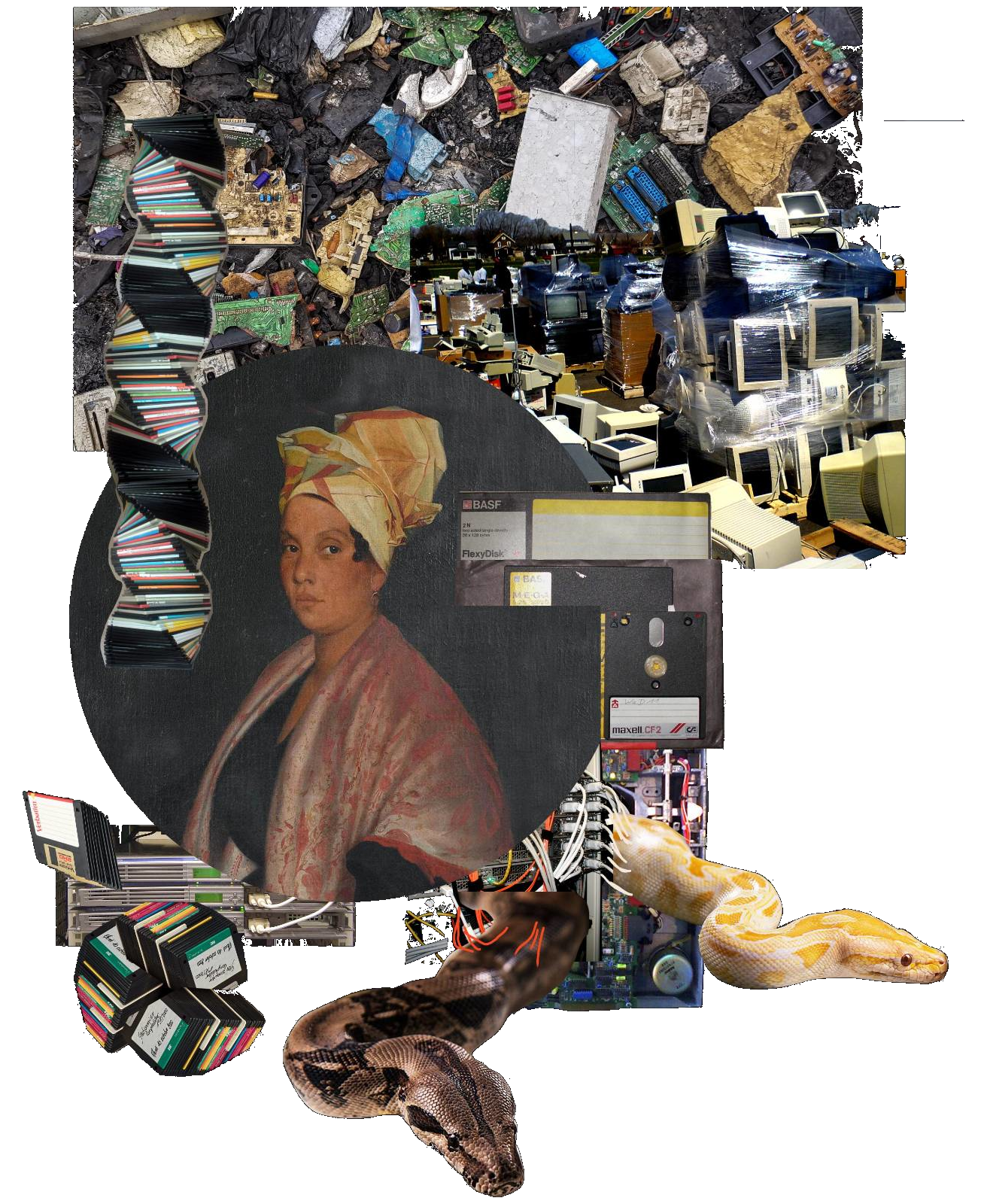
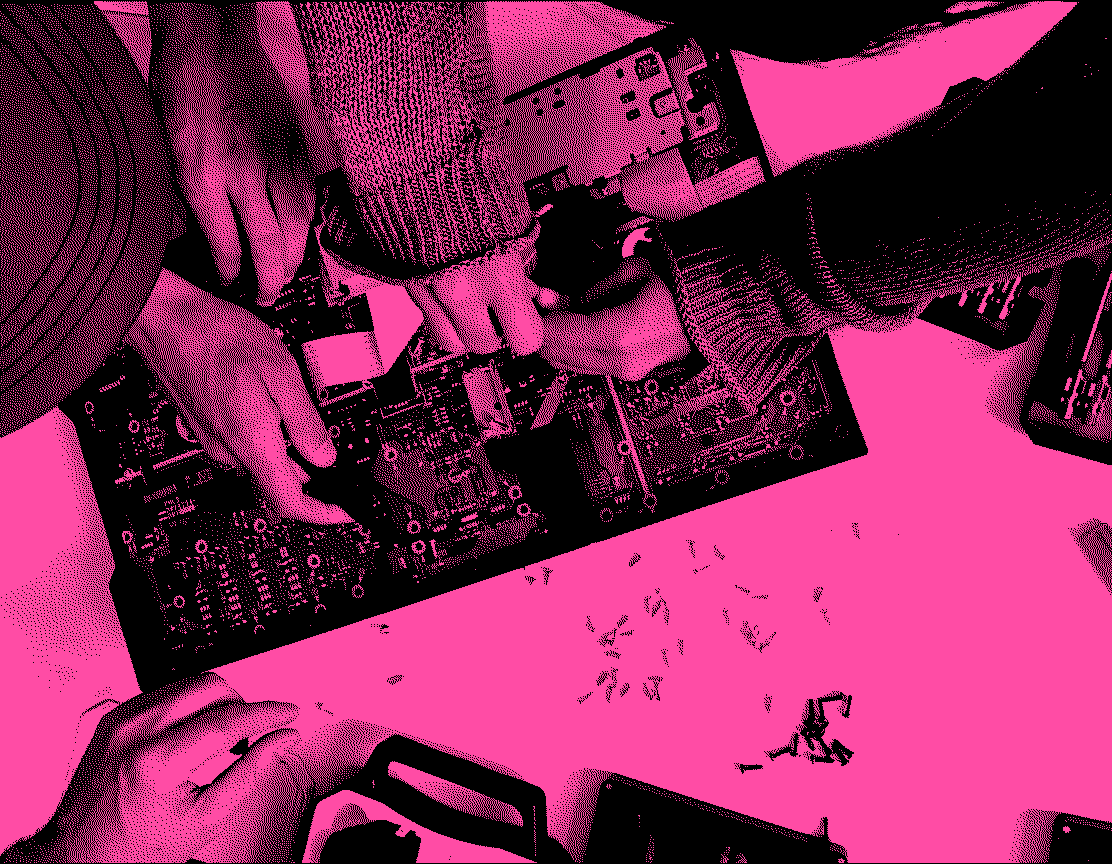
- Creating new devices from electronic waste: Permacomputing and retrocomputing practices to extend the lifespan of our devices and reduce our dependence on planned obsolescence. We will learn to repair, reuse and reimagine the devices we already own. Power sources in times of energy scarcity: how to recharge batteries and connect to alternative power sources (solar, wind, community generators). We will design energy autonomy strategies for communication infrastructures.
Methodology
The laboratory's methodology rests on five feminist principles:
1. Situated and peer-to-peer pedagogy. Workshops always start from the existing knowledge and experiences of participants. We do not reproduce the expert/student dynamic, but instead build spaces where facilitators share technical knowledge while learning from the group's practical wisdom. Each activity combines accessible explanation, demonstration, collective practice and critical reflection.
2. Care for the process and for bodies. We apply holistic security principles: we attend to participants' pace, guarantee accessibility (spaces, language, materials), prepare welcoming environments for women and gender dissidents, and integrate breaks, shared meals and moments of decompression.
3. Articulation of art–thought–technique. We reject the separation between cultural creation, political reflection and technological practice. Speculative fiction workshops feed into the technical workshops, and vice versa: technical tools nourish futurotopian imaginaries. This produces a hybrid knowledge that neither academia nor industry typically recognises.
4. Collective production and free licences. Everything generated — stories, code, guides, visuals, audiovisuals — circulates under free and copyleft licences. Authorship is collective wherever possible, and individual contributions are explicitly acknowledged when necessary.
5. Digital sobriety and free software as feminist practices. Every technical choice (servers, formats, tools) responds to criteria of low energy consumption, durability, autonomy and non-dependence on big tech corporations. Digital sobriety is not a restriction: it is a practice of caring for resources and bodies.

Collectives and companions involved
- Anamhoo
- Amigas Hacker Club: contributes to the project's visual production (collages, illustration, photomontage).
- Donestech: a cyberfeminist collective that in 2026 celebrates twenty years of work promoting the inclusion of women and gender dissidents in technological domains, feminist infrastructures, technological sovereignty, support against digital gender-based violence (VMD) and imaginaries around feminist technologies. Altranet is framed within the celebration of its two decades of cyberfeminisms.
- Més Donestech: an expanded network of creators linked to Donestech.
- Startdown lab: a collective initiated in 2025, made up of participants from Donestech and Calafou, at the origin of the Altranet project (spideralex and b01 are involved).
Contact
To organise Altranet workshops or performances, you can contact us here.

Related projects
- Permacomputing is both a concept and a community of practice oriented around issues of resilience and regenerativity in computer and network technology, inspired by permaculture.
- Futuridad: a critical, creative and situated initiative that generates spaces for consciously inhabiting the post-digital world.
- Nomad: Knowledge That Never Goes Offline — Wikipedia, AI, maps, and education tools running on your own hardware — completely free. No internet required.
- An Internet Resiliency Club is a group of internet experts who can communicate with each other across a few kilometres without any centralised infrastructure using cheap, low-power, unlicensed LoRa radios and open source Meshtastic text messaging software.
- 868labs is a Berlin-based initiative creating tactical tools for off-grid communication. We build systems that opt out of surveillance infrastructure without opting out of connection.
- Internet-in-a-Box "learning hotspots" are used in dozens of countries, to give everyone a chance, e.g. in remote mountain villages in India.
-
Connecting Offline Learners to the World's Knowledge — Bridging the digital divide with RACHEL
-
Ideas Cube: In 2015, Bibliothèques Sans Frontières created the Ideas Cube, a digital library providing access to information in the most remote locations.
-
Kolibri is an ecosystem of open digital products and tools centred around an offline-first learning platform.
It is especially designed to enable quality teaching and learning with technology, but without the internet.
```